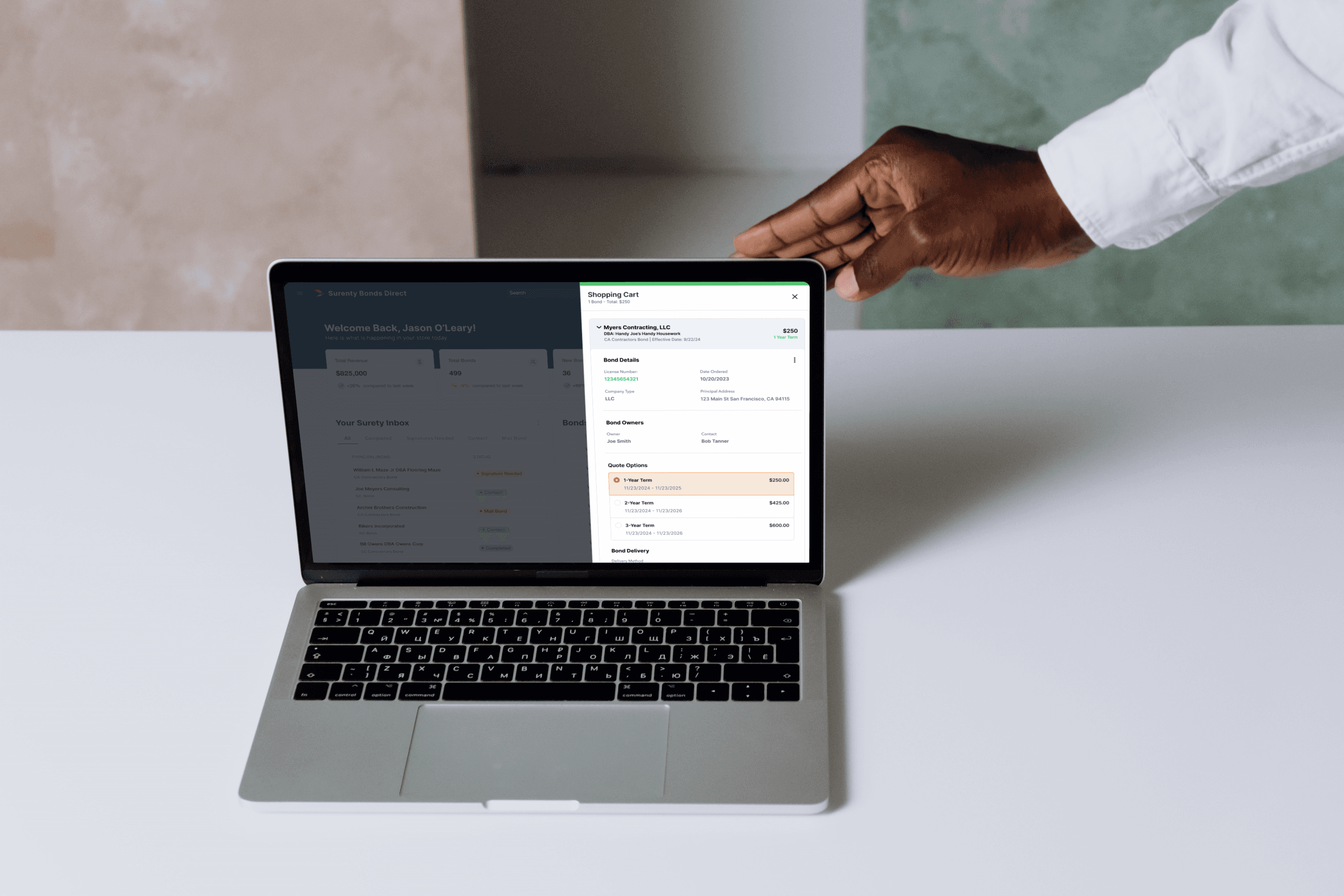
Insurance Bond Purchasing Workflows
Reimagining Bond Purchases: Turning Time-Consuming Phone Calls into Effortless, High-Volume Transactions for Different User Groups
INDUSTRY
Insurance
Role
UI/UX Consultant
Team
Direct CEO Contract
Tools
Figma Figjam
Contributions
UX Strategy, Journey Mapping, Wireframing, Prototyping
ENVIRONMENT
Regulated
Overview
An insurance bond agency was growing fast but held back by its own purchasing process. Every bond purchase, regardless of complexity, required a phone call to complete. The portal existed but couldn't get users to the finish line without human support. Contracted directly by the CEO, I was brought in to redesign the purchasing flow from the ground up. Individual buyers and high-volume affiliate agents both moved through the same system, each with different requirements, different tolerances for complexity, and different stakes if something went wrong.
Goal
Redesign the bond purchasing flow to support fully online transactions for all user types, eliminating phone dependency while reducing errors, friction, and drop-off across a complex, regulated workflow.
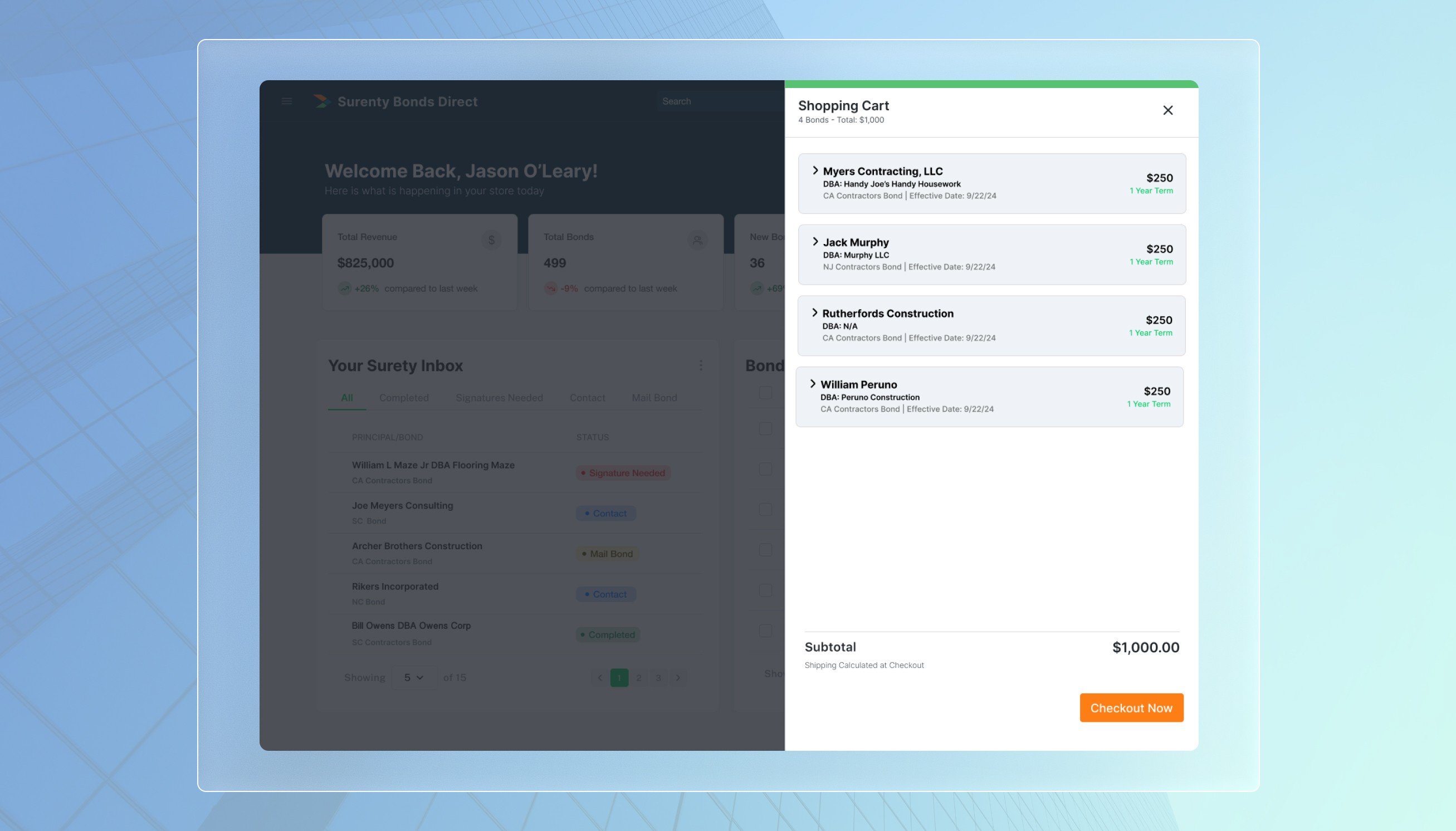
Buying Bonds, Simplified
The portal worked, technically. Users could start a bond purchase. They just couldn't finish one. The process involved multiple signatures, conditional steps that varied by bond type and user role, and a choice between receiving bonds by mail or completing the transaction entirely online.
For individual buyers, this was frustrating. A purchase that should take minutes could stretch into a back-and-forth over the phone that lasted hours. For affiliate agents handling hundreds of transactions, it was worse. The phone dependency wasn't an occasional inconvenience. It was a structural ceiling on how much volume they could process.

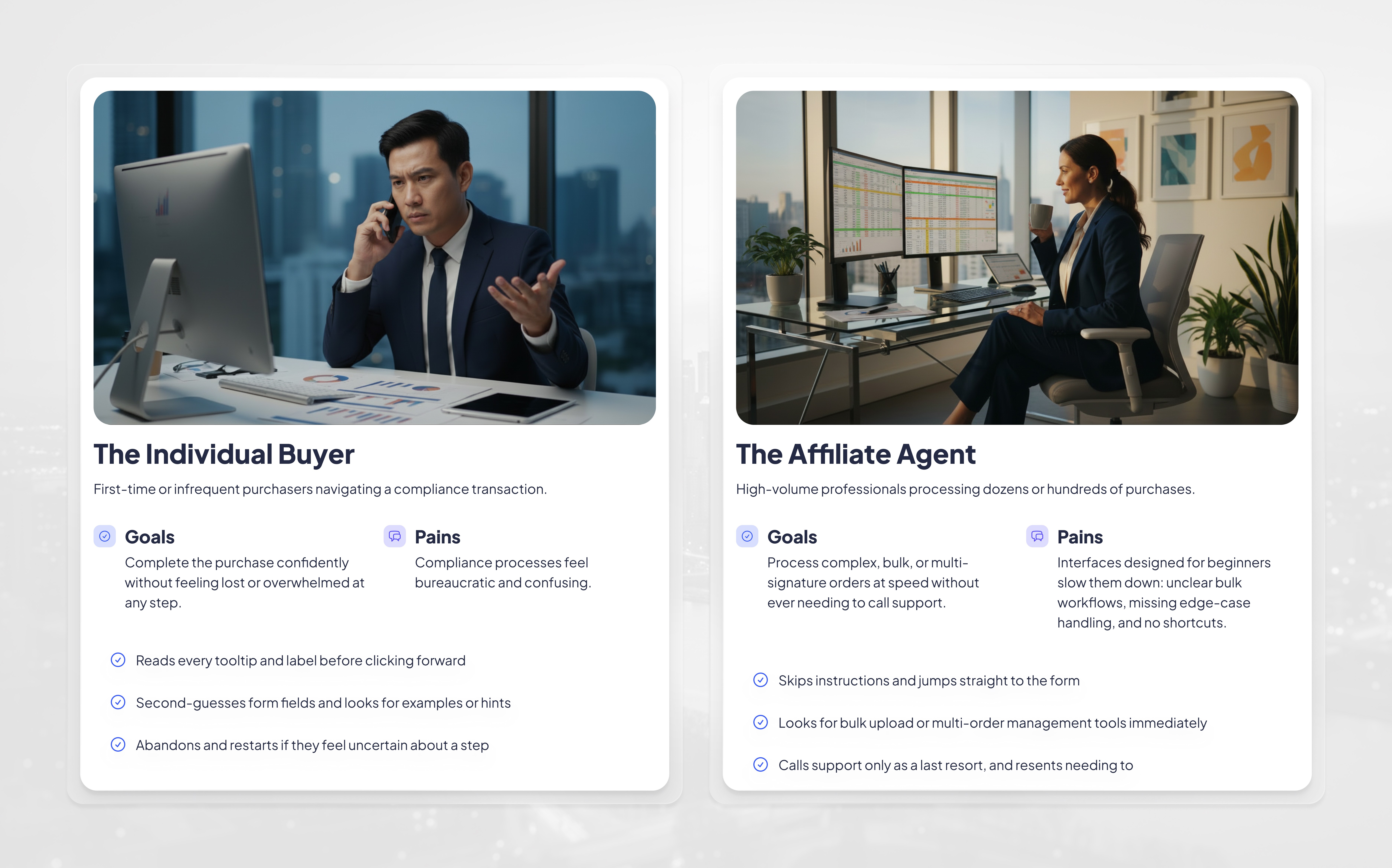
Two Users. One Flow. Very Different Needs.
Before designing anything, I mapped the end-to-end purchasing journey for both user types. Individual buyers needed confidence. They were often completing a bond purchase for the first time, in a regulated context they didn't fully understand, and any ambiguity translated directly into phone calls.
Three findings shaped the work
Unhandled conditionals: Signature requirements varied by bond type, retrieval options branched the flow, and steps mandatory for one user were irrelevant for another. The existing linear form tried to handle all of this at once, which served nobody well.
No guidance at decision points: Users hit steps requiring a choice with no context for what that decision meant or which option was right for them. Hesitation led to calls.
No confidence signals: In a high-stakes, regulated transaction, users needed reassurance they were on the right track. The existing flow provided none
The Information Was All Necessary. The Experience Wasn’t
Nothing could be simplified out of existence. The signatures were legally required. The conditional steps reflected real differences in transaction types. The complexity was legitimate. The opportunity was to reframe how it was presented: one decision at a time, surfacing options only when relevant, with enough context at each step that users could proceed without picking up the phone.
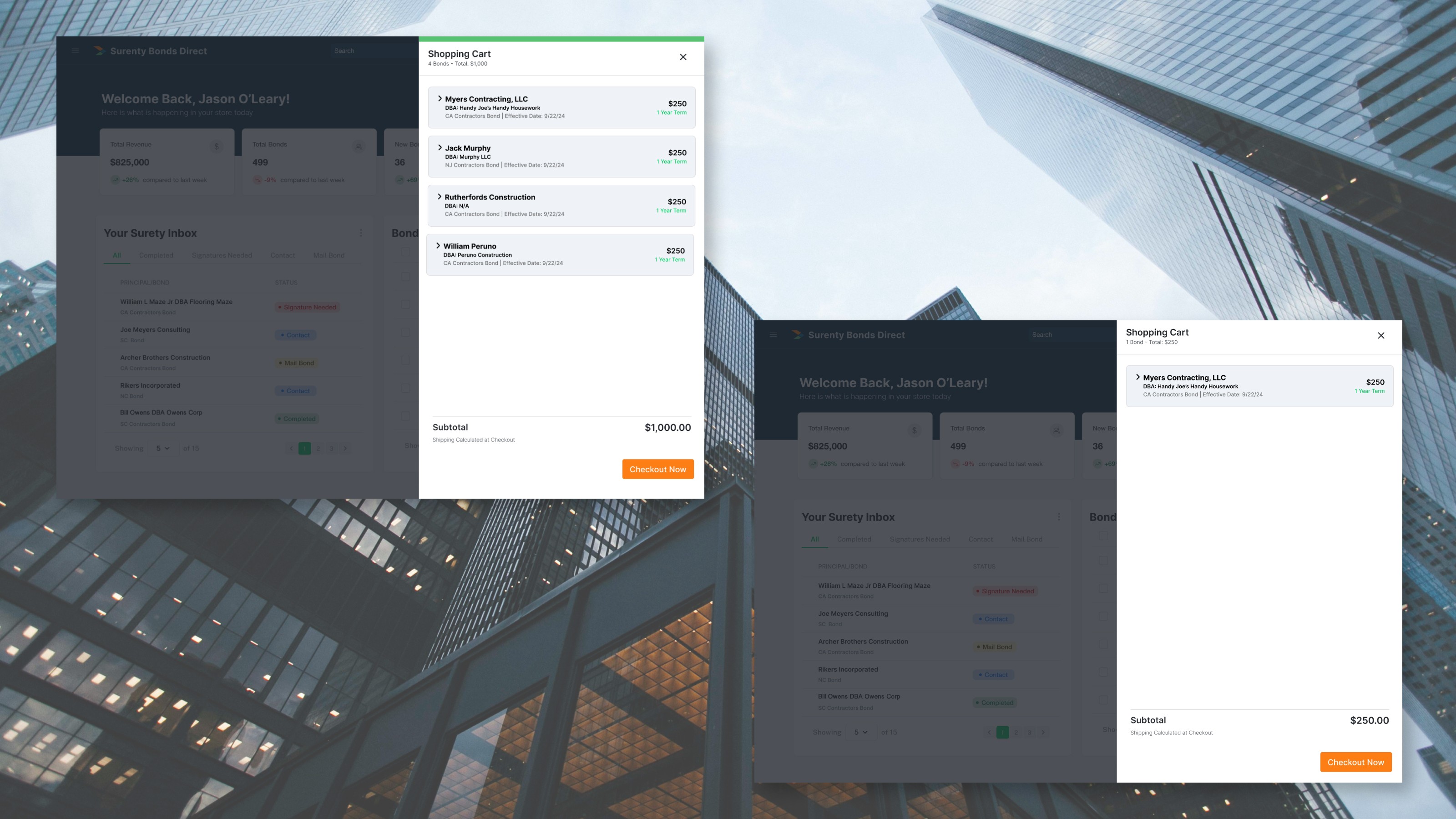
Sequencing Complexity Into Something Manageable
The redesign was built around a single structural principle: one decision at a time. Rather than presenting the full complexity of a bond purchase as a form to be completed, I translated the flow into a guided sequence where each step had a clear purpose, a clear action, and a clear path forward.
Step-by-step sequencing
Long forms were replaced with discrete, focused steps. Each screen presented one decision or action in full context, with enough information for the user to proceed confidently. Progress was always visible. Users knew where they were, what was left, and what they had already confirmed.
Smart defaults to reduce decisions
Where transaction data allowed, defaults were set intelligently. Returning affiliate agents saw their most common configurations pre-selected. Retrieval preferences were remembered. The goal was to reduce active decisions required without removing control from users who needed it.
Progressive disclosure for conditional steps
Signature requirements, retrieval choices, and role-specific options were surfaced contextually, only when relevant to that user’s specific transaction. A straightforward individual purchase never surfaced affiliate agent options. Multi-signature steps appeared only when the bond type required them. The flow adapted to the user rather than asking every user to navigate options that didn’t apply to them.
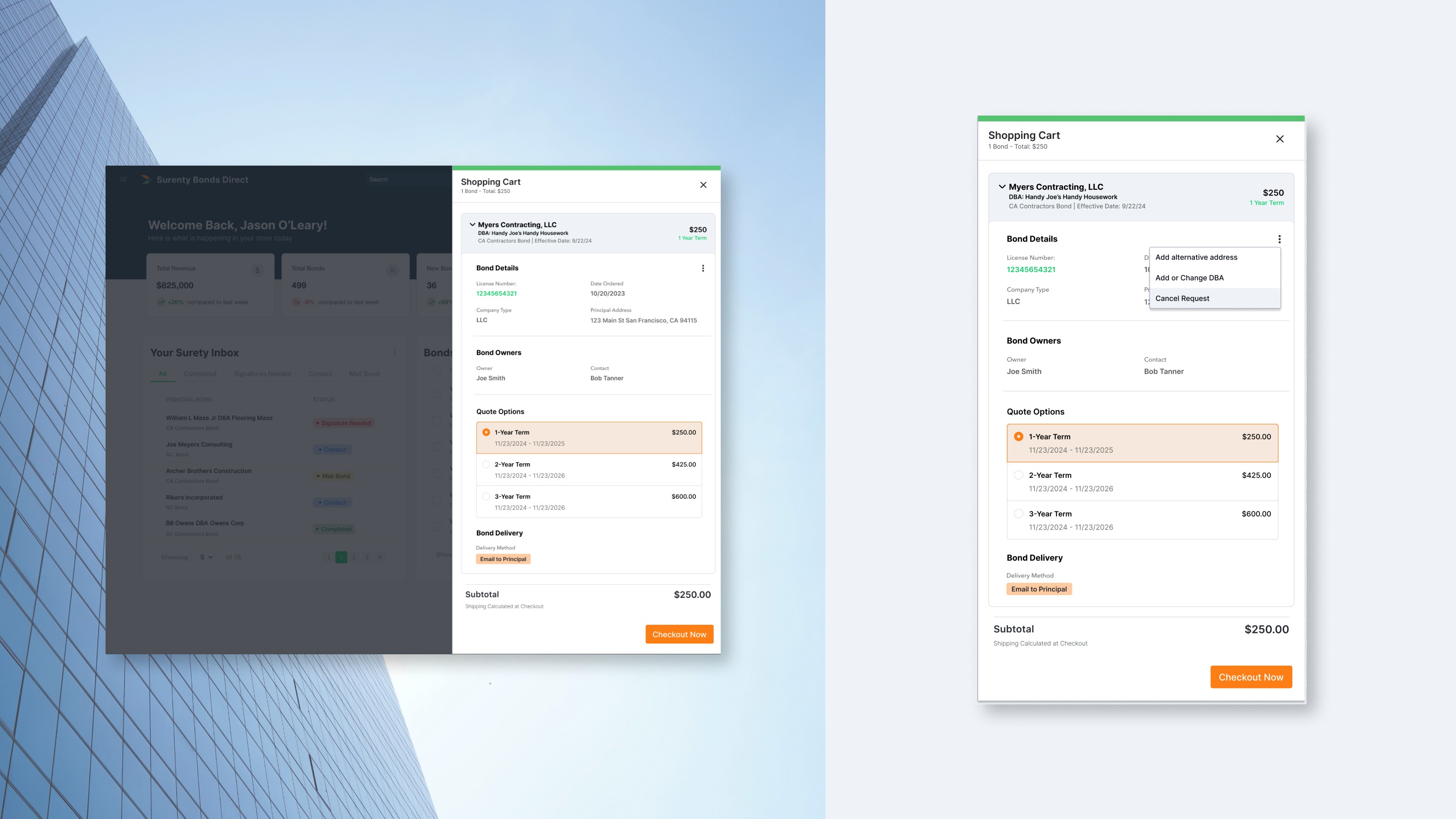
Built for compliance, not despite it
Close collaboration with engineering ensured every design decision held up against the regulatory requirements of the bond purchase process. Compliance wasn’t treated as a constraint to design around. It was built into the flow from the start, so the experience felt guided rather than restricted.
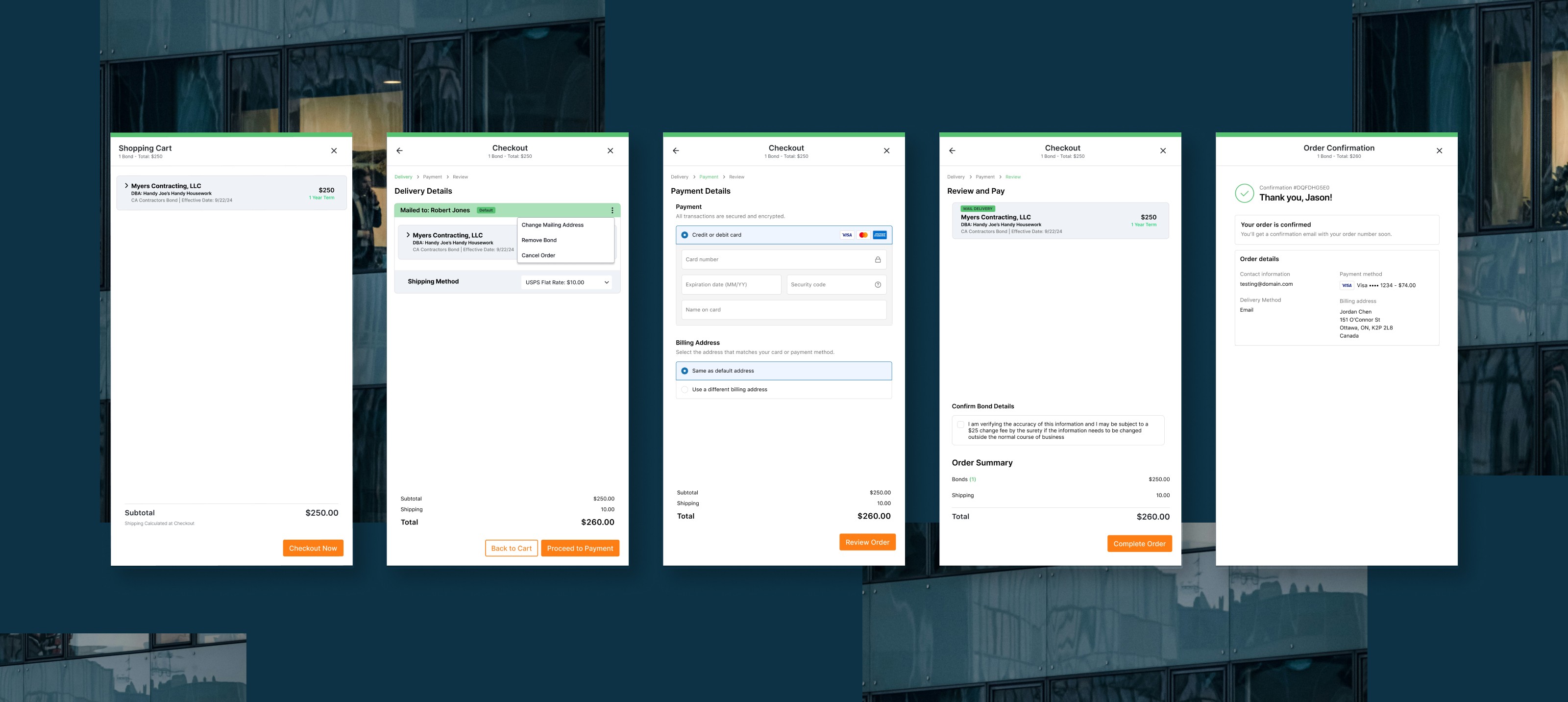
143% Company Growth.
The redesigned purchasing flow removed phone dependency. Individual buyers and high-volume affiliate agents could now complete transactions from start to finish without support. The results were measurable. The purchasing flow stopped being a bottleneck and became infrastructure. Affiliate agents scaled their volume. Individual buyers completed transactions with confidence. The support team focused on value-added work rather than fielding calls the portal should have handled.
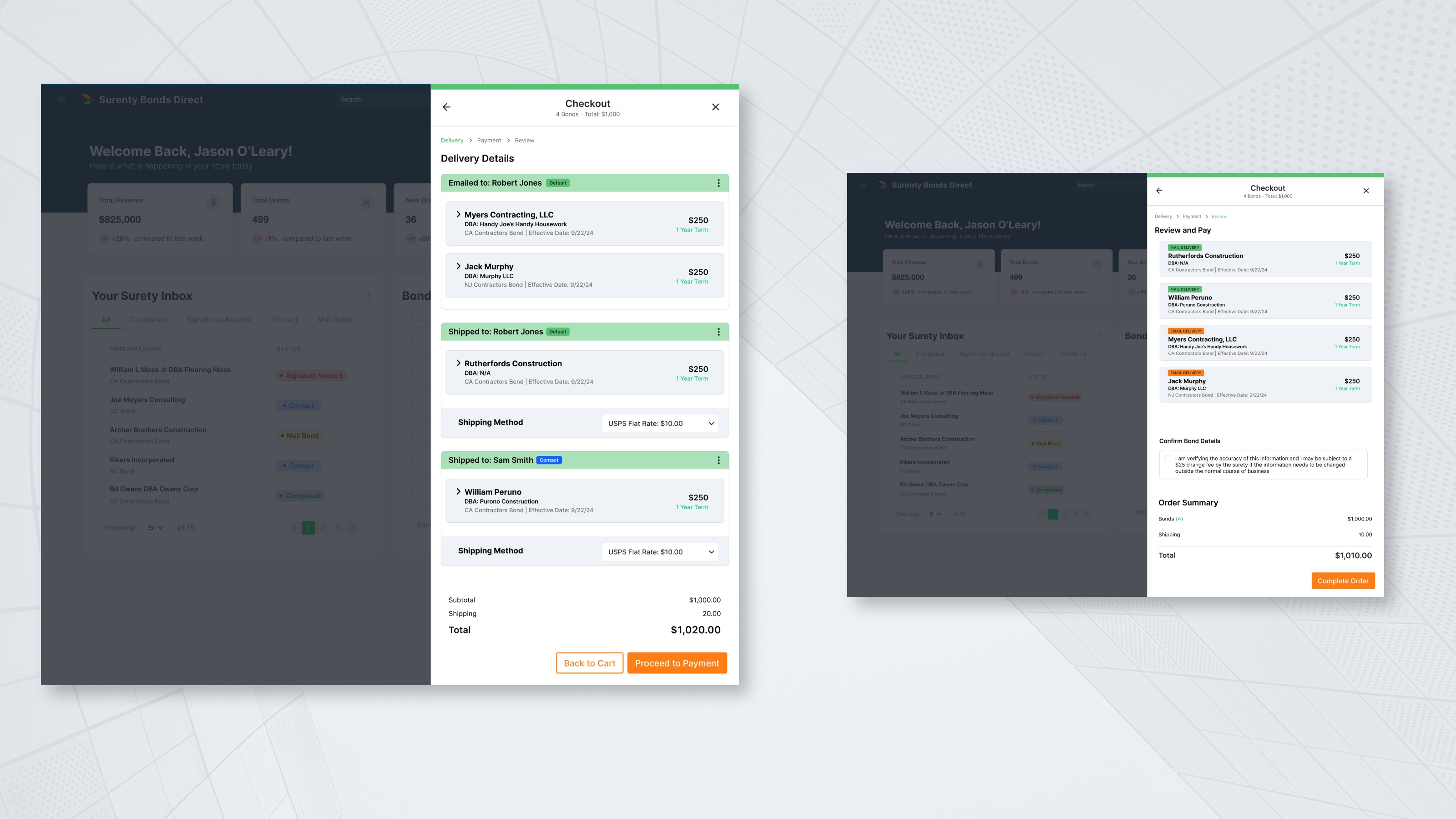
In High-Stakes Workflows, Clarity Is The Product
A bond purchase is genuinely complex. But complexity handled well doesn't feel complex to the person moving through it. It feels guided. Two things I carry forward:
Solve the core problem first: Everything in this redesign followed from one decision: make it possible to complete a purchase without calling anyone. That single constraint clarified every other design choice.
Sequencing is a design skill: How you order information and decisions shapes whether a user feels in control or overwhelmed. In regulated environments especially, the sequence of steps is as important as the steps themselves.
What I Owned On This Project
Mapped end-to-end purchasing workflows for individual buyers and affiliate agents
Designed high-fidelity wireframes and an interactive prototype in Figma
Defined conditional flow logic accommodating signatures, bond type variations, and retrieval options
Collaborated with engineering to validate feasibility, scalability, and regulatory compliance
Worked directly with the CEO to align design strategy with business growth objectives